Lessons from the Garden: Companion Plants
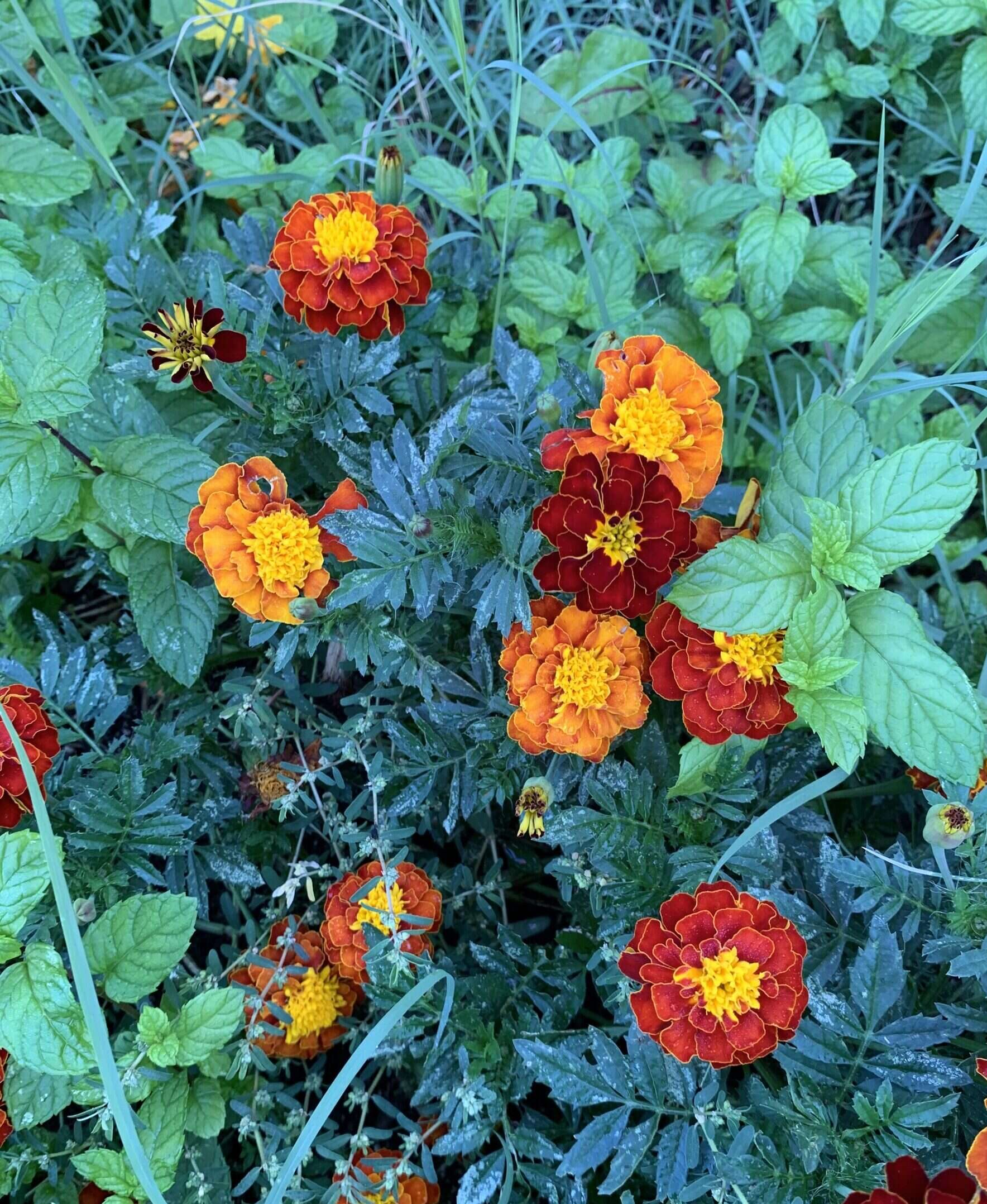
God designed and planted the first garden to meet the needs and satisfy the desires of His image-bearers. In it was every tree that was beautiful and fruitful. The gardener in me sighs longingly at this phrase. To grow artichokes for the beauty of them does not deny me a petal or two steamed and dipped in garlic butter, and to grow trees for their fruit does not render me immune to the beauty of the glossy purple spring leaves on the thorny, but prolific lemon tree or the delicate snow-drift of the plum in bloom.
I often forget what else was growing in Eden: choice and the potential for eternal doom or glory — the tree of life and the tree of the knowledge of good and evil.
None of the trees in my orchard are that powerful! But there is another kind of garden that is under my feet that may be. We are God’s field, His vineyard, says Paul. We do not have the option to plant ourselves elsewhere, even when we don’t like where we are.
The “companion plants” around us are for our benefit.
In my garden, I am careful not to plant peas or beans near onions (They inhibit each other’s growth.), but lettuce and tomatoes near onions? Yes, please! Some kinds of companion plants repel pests, others add nutrients to the soil, still others are magnets for pests so that the bugs leave the ones we love alone.
One year I had mostly cucurbits in my garden: squash, melons, and cucumbers.
Beautiful AND delicious, but all susceptible to squash bugs.
I tend to have a rather lackadaisical approach to garden maintenance…or I did until after that year. I got hit with a plague of squash bugs. Hiding under leaf litter, they took over and multiplied faster than I could find the egg clutches. Overnight I lost nearly the whole garden. If I had maintained it, or interplanted with some repellent plants, or staggered the planting dates, I might not have lost so much. I understand the need to have some discipline about keeping things picked up and adjusting the planting schedule to avoid the big hatch.
Our Master Gardener knows just what kinds of “plants” to put together in His garden for the benefit of all. I can choose to grow in love for the ones He has planted me among, or I can squirm and complain about them, wishing they would go away, or that I could.
One of these choices causes us to become “oaks of righteousness, the planting of the Lord for the display of His splendor,” in other words, a tree of life. The other has results like the tree of the knowledge of good and evil: death, separation, isolation.
It isn’t always easy to grow in the communities where God has planted me, but if I would be a planting that brings Him glory, I need to trust Him with the plants around me.
If I do, I just might see the beauty around me I didn’t know was there.
Following Jesus every day in the everyday,
Christi



0 Comments